Clothing Care
How to Remove Grass Stains From Clothes
Grass stains are chlorophyll bonded to protein, which is a dye stain, not a dirt stain. Alcohol dissolves the pigment and enzymes break the protein.
Clothing Care
Blood is a protein stain, so hot water cooks it into the fibre permanently. Cold water, salt and enzymes are what actually work, in that order.
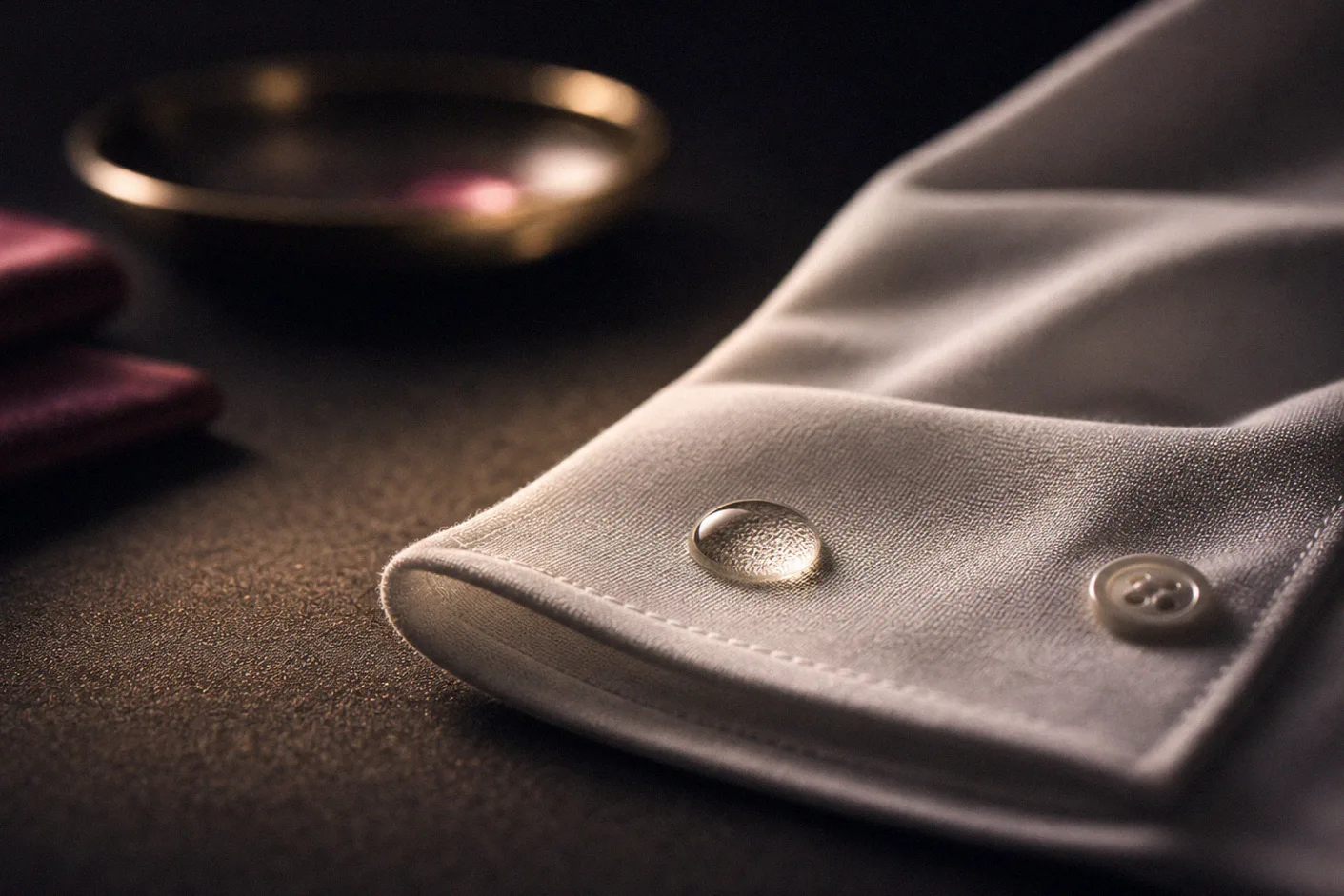
To get blood out of clothes, rinse immediately under cold running water from the back of the stain, then soak in cold salt water or enzyme detergent before washing cool. Blood is protein. Hot water coagulates it and bonds it to the fibre permanently — this is the single mistake that turns a removable stain into a permanent one.
Haemoglobin denatures at around 40°C, the same way an egg white sets in a pan. Once denatured, the protein is mechanically locked into the weave and no amount of detergent will lift it. Every stage of blood removal happens in cold water, from the first rinse to the final wash cycle.
Dried blood needs rehydrating before anything can lift it. Soak the garment in cold water for one to three hours, changing the water when it discolours. Then work in enzyme detergent and leave it another hour. For stubborn marks on white or colourfast fabric, apply hydrogen peroxide directly — it will foam as it reacts with the blood, which is the reaction doing its job. Rinse cold afterwards and repeat rather than leaving peroxide sitting on the fibre.
Enzyme detergents digest protein, and wool and silk are protein fibres — an enzyme soak will damage the garment itself. For these, use cold water, salt and a wool-safe detergent only, with patience instead of chemistry. Hydrogen peroxide is also unsafe on both.
An old blood stain that has oxidised leaves a brown iron mark rather than a red one. Oxygen bleach soaking clears this on whites over four to eight hours. On colours, repeated cold enzyme soaks are the safer route, though a faint shadow sometimes remains on very old stains.
Yes, permanently. Heat coagulates the protein into the fibre. Use cold water at every stage, including the wash cycle.
Soak in cold water for one to three hours to rehydrate, then use enzyme detergent for another hour. Hydrogen peroxide works on whites and colourfast fabrics but not on wool or silk.
Cold salt water draws protein out of the fibre by osmosis and is genuinely effective on fresh blood. It is less useful once the stain has dried.
It is much harder because heat has denatured the protein, but long cold enzyme soaks combined with oxygen bleach on whites will often lighten it substantially. Treat it as a salvage attempt.
Oxidised protein leaves a brown cast that photographs darker than it appears in the room.
Shoot in daylight rather than under tungsten, which pushes the mark warmer still. Sellers replacing damaged stock regularly end up weighing studio costs against a virtual try-on or AI clothes changer workflow, and those are the tools we score.
Who wrote this
A Los Angeles based team of ecommerce production people, retouchers and reviewers. We run every AI try-on tool through the same 12-garment control set and publish the raw numbers.
Every AI tool mentioned on this site is tested on our own paid accounts against a fixed 12-garment control set, and scored on five published dimensions before any ranking is written. Read the full methodology or email hello@removeclothing.com with a correction.
Clothing Care
Grass stains are chlorophyll bonded to protein, which is a dye stain, not a dirt stain. Alcohol dissolves the pigment and enzymes break the protein.
Clothing Care
Wax removal is two jobs: lift the solid, then dissolve the oil that stayed behind. The iron-and-paper method works, but only if you do the second half.
Clothing Care
Mold is a living organism, so the stain and the smell are separate problems. Kill it first, then lift the pigment, then deal with what caused it.
All articles | Our full ranking of the best AI virtual try-on tools
Newsletter
Score changes, price movements and new guides from the same test desk — one email a month, one-click unsubscribe.